
On Aliveness
A Participatory Resolution for 2026

I hope you’ve been faring well over the holiday season, dear readers. I’ve been away from this newsletter for the usual reasons – teaching responsibilities, travel commitments, and the stress-inducing realization that I owe my editor a book manuscript in 2026. Meanwhile, the abysmal headlines keep on coming, and the damage to people keeps on growing.

In my own extended family, we wrestled with hard choices about health insurance premiums last night as the Obamacare subsidies were set to expire. On the way to the airport in Cincinnati this morning, the man who drove our Lyft lambasted the current administration and said his girlfriend’s premiums leapt to $1,000 per month. She, too, was up late worrying about a coming bill that she could not pay. I imagine this same scene was playing out in hundreds of thousands of households across the country. And I predict that 2026 will be harder than 2025 for many people, in many ways. I urge us to try to support others and care for ourselves through the continuation of this cruel chaos-coaster we are now riding.
But even as the economic pressures increase, so do the avenues for opposition to this heartless regime. Some supporters of the current administration are beginning to sense betrayal because of tariffs, the Epstein files, and the deportation of neighbors. Conservative media personalities are also breaking ranks, which means that criticisms of current policies may filter through to voters.
It has felt to me, too, that voices of reason and forces for good have been gaining strength. In late September, I had the opportunity to visit the Princeton Theological Seminary in Princeton, New Jersey on the occasion of the 10th anniversary of the school’s “Farminary” (a term they coined). I was invited to speak on the Farminary campus, a working farm and outdoor classroom that combines earth care, food production, and spiritual education. The Black feminist geographer and founder of Dandelion Farm in North Carolina, Chérie Rivers, would surely shorthand this bundle of activities as “nourishment” in holistic form.
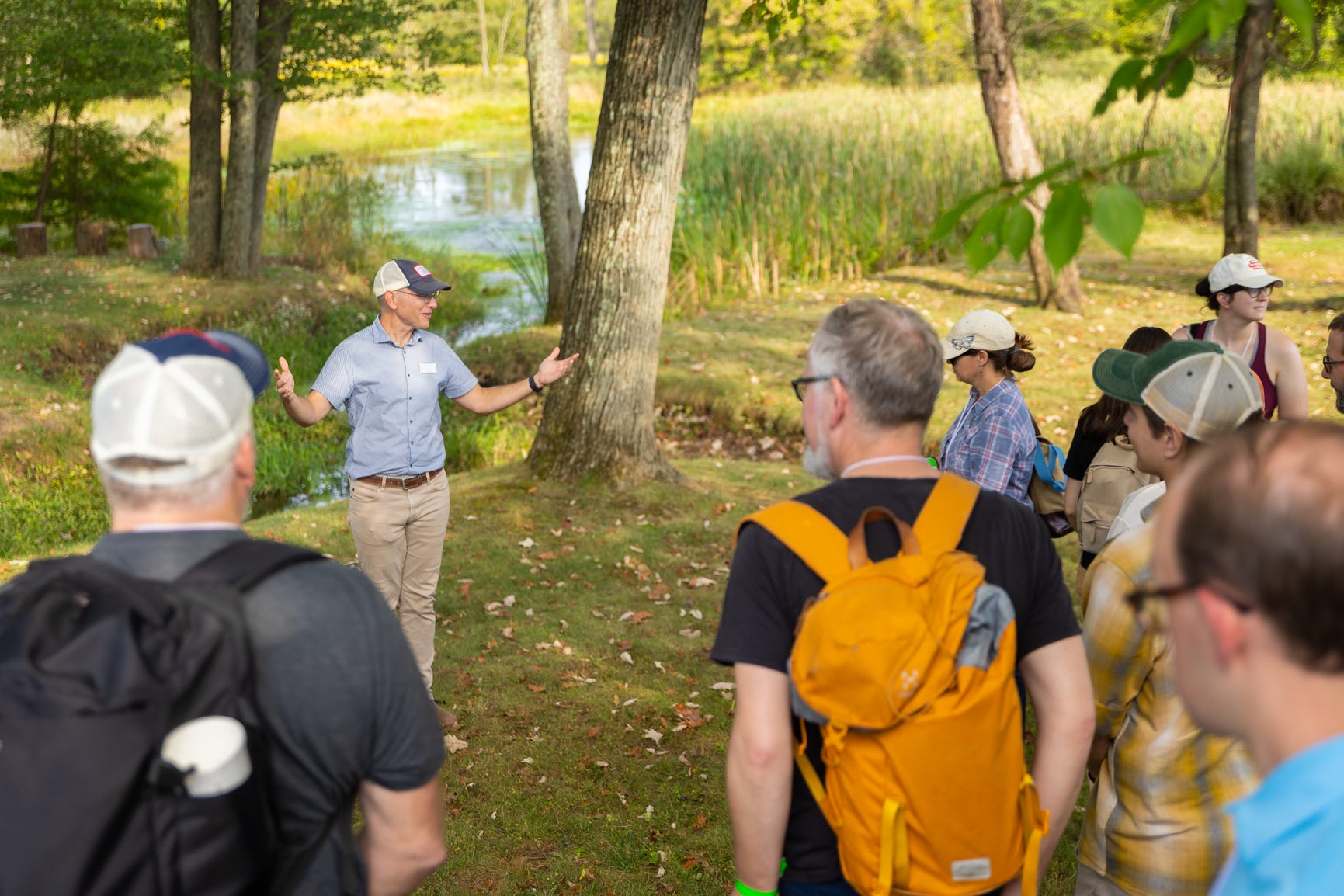
The slogan on the Farminary t-shirts reads: “Let Creation Preach,” expressing an ethos of integrative faith and ecology that permeates the place. The people who gathered over several days to celebrate the anniversary of the Farminary, the vision of founding director, Nathan Stucky, talked, listened, and shared in joy even while addressing the dark shadow of aid program cuts and ICE abuses hanging over the nation. I participated in a Friday evening dialogue with Nate that focused on Harriet Tubman’s spiritual strength and ecological clarity. The night felt electric to me as I drew encouragement from Tubman’s story and from the reaction of others under the tent upon hearing it. This was the first time I had audience members urging me to “Preach! Preach!” as I spoke about my research.


The real worship service took place the next morning under the trees and open sky. The Reverend Heber Brown III preached on the theme of spiritual imagination, assuring those gathered that despite the appearance of evil’s chokehold, he has faith that “God is up to something.” He insisted that we can call change into existence by first envisioning it: “We can speak those things that are not, as though they are.” The swaying meadow and placid pond, garden plots and greenhouses, sounds of frogs, and flocks of birds made a magical setting for his message. (I was so enveloped by the peace of the place that I could not take pictures. That’s why all the photos here come courtesy of Nathan Stucky and the Farminary crew.) Nature is a soother of over-taxed nervous systems and a muse for imagination. Joining with others in nature’s embrace to name the wrongs in our world and to claim a resistant yet loving stance is both nourishing and empowering.
Maybe this experience of gathering strength among the Farminary’s fields and trees is why I embraced winter greenery this season. We bought our Christmas tree the day after Thanksgiving – a first. I hung evergreen wreaths outside the house and inside as well – another first. It lifted my spirits to walk past the woven circles of pine needles, smelling their invigorating scent as I went about my everyday tasks. The greenery reminded me of the presence of life and the root of our resistance: we honor life; we fight for life; we want, in the words of literary scholar Scott Richard Lyons, “more life.”
What this administration produces through its inhumane treatment of immigrants, families, struggling workers, unemployed people, fishermen at sea, and more, is exactly the opposite – a rejection of life, a diminishment of life, a theft of life: less life. Since we want more life, and the governing powers want less life, perhaps we can best them by choosing and boosting a wild aliveness – being fully, unpredictably, stalwartly, joyfully, and collectively alive in 2026.
In the spirit of celebrating our fellow earth dwellers as well as our ancestors, who still give life, Happy New Year!
PS
- The Chérie Rivers attribution comes from a key theme in her book in progress about Dandelion Farm that she shared at the Charles Warren Center faculty fellows seminar in 2024-2025 at Harvard University. The Scott Lyons quote comes from his book X-Marks: Native Signatures of Assent, published by the University of Minnesota Press Indigenous Americas series.
-I didn’t make time to watch new releases in my favorite movie genre this season – Hallmark(ish) Christmas movies. If you saw a TV or streaming holiday movie that made you smile, please tell me about it in the comments. (For a detailed account of my take on these movies and why I love them, see my December 2023 Carrying Capacity post.)
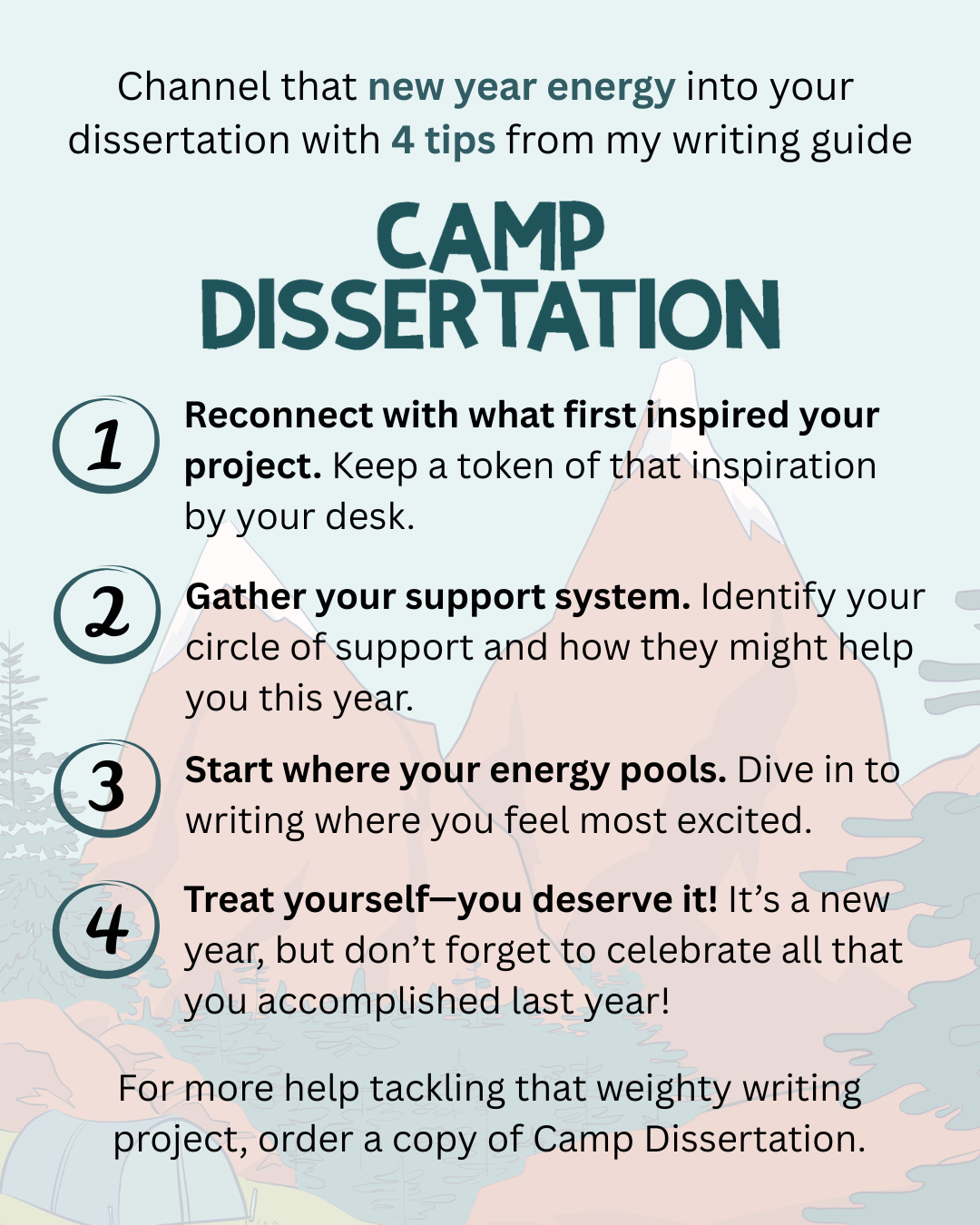
-If you’re a dissertation writer, I have good news. January is your month! It’s cold in most places, and you will rejoice to be inside cuddled up with your laptop, desktop, tablet, or notebook. The new year offers a fresh beginning and lots of company in the resolutions department. Resolve on New Year’s Day to start or finish a chapter. I’ll be cheering you on in Camp Dissertation.
Thank you for taking us along with you to the Farminary, Tiya. I learned so much! When Reverend Brown said, “We can speak those things that are not, as though they are ...” it made think about how, as soon as the dams came out, the salmon returned to the Upper Klamath River this year. And I began to see that the salmon may seem to be "not" in a river, yet are they really gone? Their ancient bones fill the watersheds wherever they once thrived and so they are still there, unseen, yet waiting for an invitation to return.
I love what you said about wanting more life! More greenery! You inspire me to send out as many invitations as possible for the life party while the "cruel chaos-coaster" ride grinds to a halt.
Thanks for this reflection! It makes me proud (not always the case…) to be a graduate of the seminary. I love your wisdom that January is dissertation month. Happy 2026.