
Love Bundle, Part I
Pecans, Puppies, Romance, and Louisa May Alcott!

This post is full of bright, fluffy things to fill your virtual Valentine’s Day jar.
I confess two sins. 1.) I am not a sports fan. 2.) I had to ask my kids who Bad Bunny is – twice. I watched the Super Bowl halftime show reluctantly at their invitation and found a welcome surprise. I admired the vibrant mix of spectacle, symbolism, and positivity. I cheered at the big, bold message on the scoreboard: “The only thing more powerful than hate is love.” But for these words to have real force, we must act as if we believe them. What would you do differently today if you trusted the power of love? What risks would you take tomorrow if you knew love would prevail?
Louisa May Alcott and Ellen Garrison!
Doesn’t everyone love Louisa May Alcott, the plucky Massachusetts novelist who wrote the nation’s first YA blockbuster novel, Little Women? Most of the students in my fall seminar, Abolitionist Women and Their Worlds, would have balked at that question. In a class of thirteen students, only one was an ardent Alcott fan, and only a few had read Alcott before. When they learned that our final class project would be a public history collaboration with the creators of a Louisa May Alcott podcast, the students seemed . . . bemused.


Word of mouth had traveled about this class in which past projects included creating a digital walking tour of Black women’s historic sites in 19th-century Cambridge. Louisa May Alcott may have seemed saccharine and boring to those students who knew very little about her. But during our field trip to Concord where we toured the Alcott family’s Orchard House as well as the home of the Black patriot Robbins family, the students came alive. It intrigued them to consider Louisa May Alcott in the context of her place and time, when she was a diehard abolitionist living near Black activist neighbors.
With the guidance of the teaching fellow for the course, PhD student Ciara Williams, the students researched, wrote, and recorded a special episode of the Let Genius Burn podcast, created and produced by public historians Jill Fuller and Jamie Burgess. The students reported a deeply rewarding experience in which they learned as much about themselves as researchers and collaborators as they did about Concord’s history of abolitionist organizing. They reveled in sharing Louisa May Alcott’s experiences alongside those of a little-known Black contemporary of Alcott’s, Ellen Garrison, who became a prolific letter writer and a devoted teacher of Black children in Kansas. You can listen to the students’ charming podcast here.
Fun Fact: In this class, we do food! To get a better feel of the culture of activist women, we read and discuss recipes produced by abolitionist organizers and suffragists. We have been fortunate to have teaching fellows who love to bake (Ciara Williams and Saffron Sener) and have tried out a few of these vintage recipes to share with the class.


More Sweets!
Clearly, I have a sweet tooth. It started with my grandmother, who was a dreamy cook. When I was little, I couldn’t decide which of her recipes I loved the most – rice pudding, peach cobbler, sweet potato pie, or apple pie. I landed on rice pudding, but it was a close call. In my book, All That She Carried, I included pecan dessert recipes to remind myself and readers that Black life was full of creative ways to care for loved ones even amid trouble and suffering. During a recent trip to Toronto, where I spoke on a panel with the fabulous novelist Esi Edugyan and the equally marvelous host and moderator Nahlah Ayed, I had a wonderful surprise: The producer of the Ideas podcast (Canadian Broadcasting Corporation), Greg Kelly, made one of the pecan cookie recipes, substituting in local maple syrup! They were scrumptious.
Scholastic Romance!
When I spend time with fellow academics lately, I notice that we seem dour and down, filled with doom and disappointment – and for good reason. Our sphere has been hit hard. You don’t need me to count the ways. But these are our lives, our schools, our purposes. I want us to rediscover hope, weave connections, and feel joy. Last summer, while listening to the Shelf Love podcast, I heard one of the voices say that romance is the “hope-iest” genre. I’m trying out the thesis by embracing scholastic romance, a subgenre of romance fiction that I’m making up, because scholars need love too. What is scholastic romance? All the love stories you’ve read set on campuses, in libraries and museums, at research sites and university or independent presses, and featuring scholar-researcher-explorer-librarian-teacher-scribe-type characters. In other words, all the stories that might appeal to academic lonely hearts. One of my favorites in this subgenre is an oldie by Jennifer Crusie, The Cinderella Deal, about an impulsive artist and button-down historian who concoct a fake marriage so he can secure a job at a traditional liberal arts college. (Medium spice.)
After I published my novel, The Cherokee Rose, which is part ghost story, part mystery, part historical fiction, and part romance, I heard from an old grad school friend. “You’re a romantic,” she pronounced. Then, I didn’t know how to take it. Now, I think she was right.
If you’re a romance reader (secret or otherwise) and would read lists or reviews of books like these, please let me know in the comments (or the other ways that you reach out to me).
At the end of this post, you’ll find chapter 1 of a fun scholastic romance story written by the Columbia University Press editor and illustrator of Camp Dissertation, Alyssa Napier, who was also the first teaching fellow for Abolitionist Women and Their Worlds back when we taught it remotely during the Covid pandemic. (Shout out to the grad students who came to hear us talk about the dissertation guide last week!)
Short Shares
During my late-night news binges, I appreciate historian Joanne Freeman’s YouTube Channel. In her series, A Few Thoughts for Those Who Can’t Sleep, she casually chats with viewers about her thoughts on events of the day. Her words feel authentic, honest, and steadying.
I can’t claim to really know Minnesotans, but I did live in Minneapolis for three years while in graduate school at the University of Minnesota. January was a horror show as ICE descended on the city and took the lives of Renée Nicole Good and Alex Pretti. Like many, I was saddened and distraught at what residents there were enduring, even as I was inspired by their determination and courage. Minnesotans’ example shows us how to be visible and vigilant and how to enact creative resistance. As the country commemorates the American Revolution that began in Boston, it strikes me that Minneapolis is the Boston of our time.
(I was moved to see that the Star Tribune recently included All That She Carried in a list of books that encourage kindness.)
Puppies!
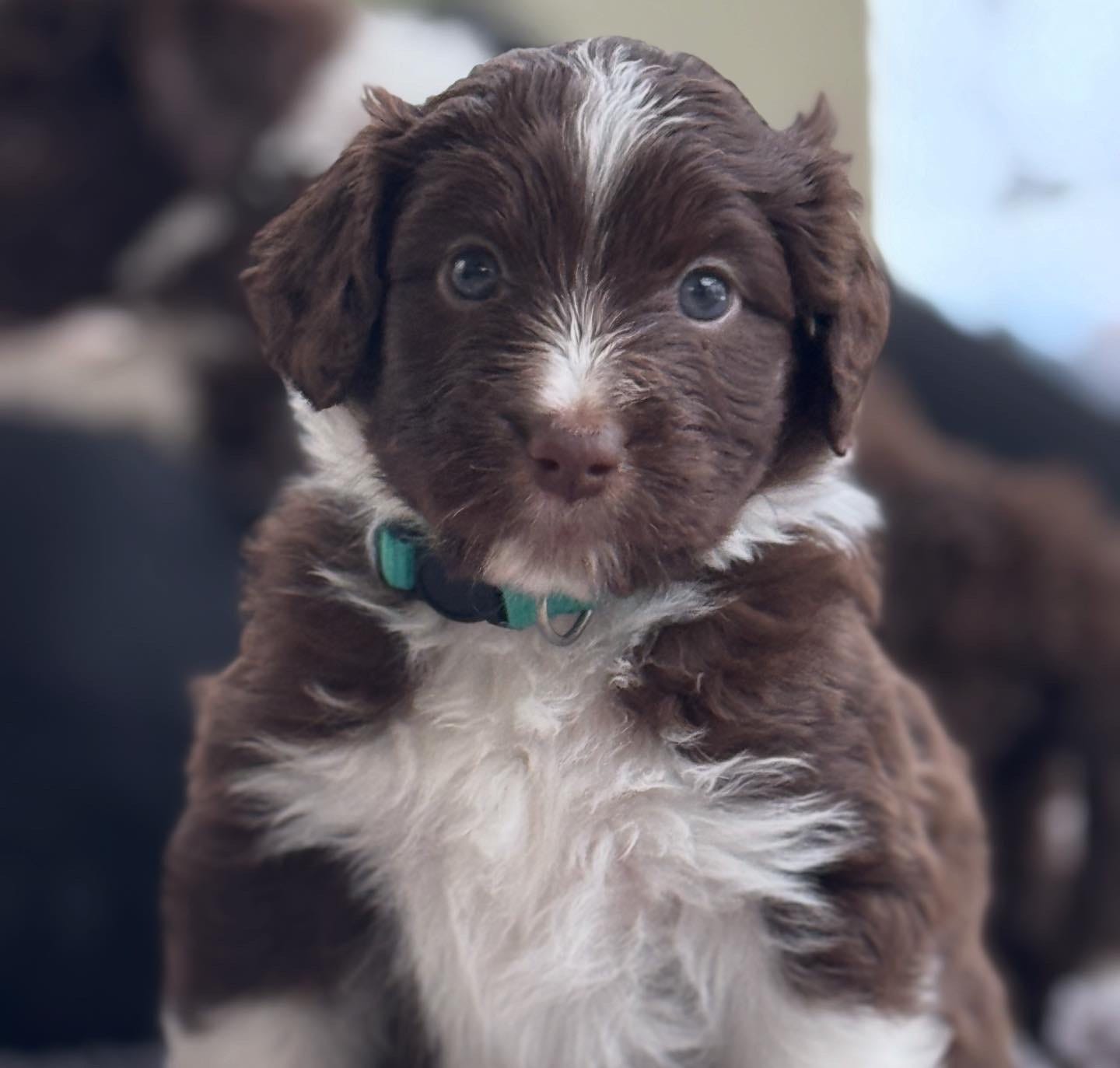
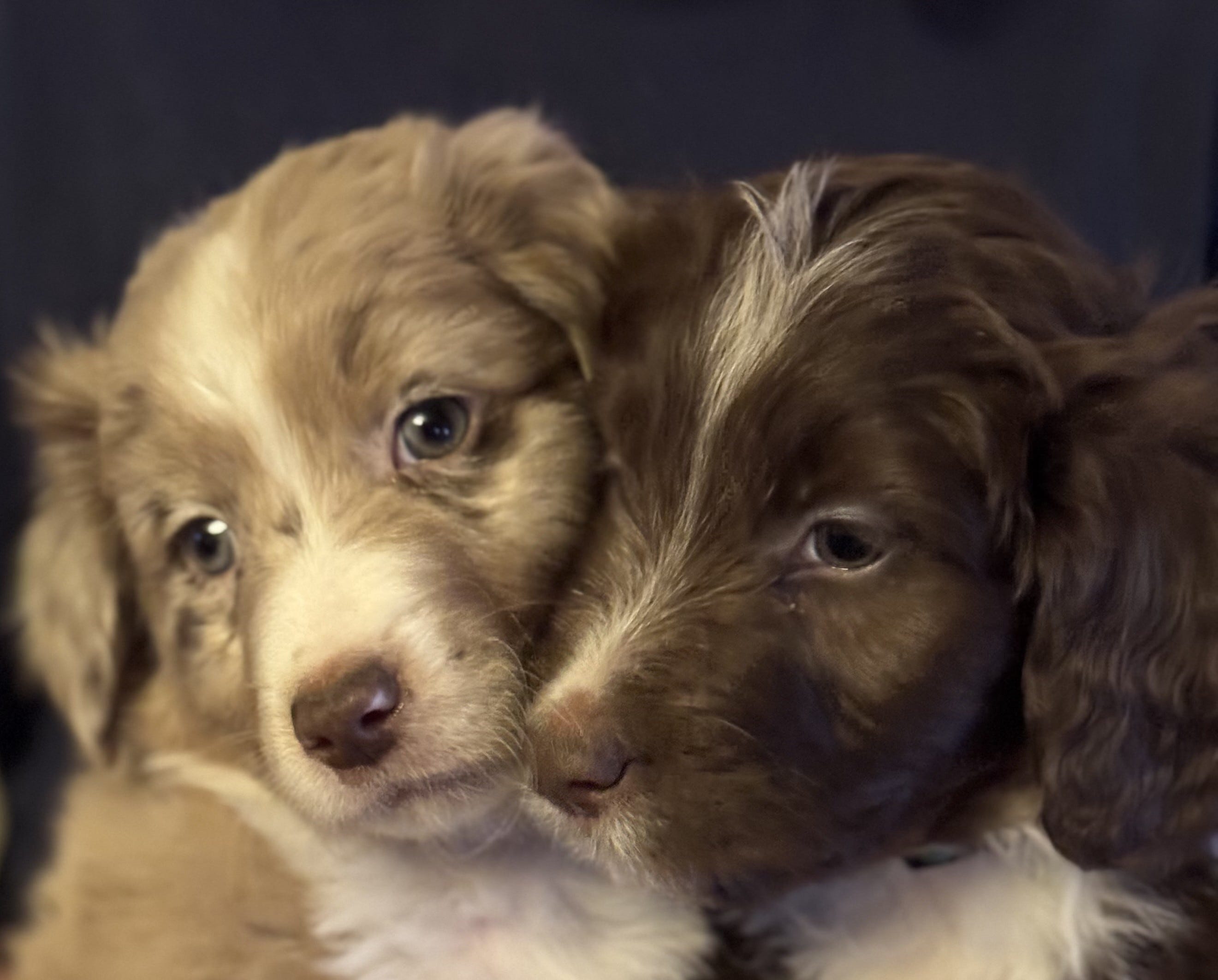
I promised puppies, and here they are, our new chaos agents and guaranteed doses of daily joy. Yes, I am a marshmallow mom who has lost her mind.
Words Apart
And finally, chapter 1 of “Words Apart,” a scholastic romance by Alyssa Napier. Enjoy the beginning of Alyssa’s meet-cute story set in a fictional HBCU press in the 1970s. Find out how the story ends in Love Bundle, Part II. Happy Valentine’s Day!
***
A Note from Alyssa: Today, university presses publish a wide variety of books that target readers beyond academia, including poetry, comic books, original fiction, art books, memoirs, and more. But in the 1970s, university presses began experimenting with publishing commercial books for a more general audience. Back then, Black students (inspired by the Black Power and Black Arts Movements) were demanding that colleges, especially HBCUs, be more connected to the wider Black community and change their curriculum away from the standards and values of white academia. These demands led to the development of Black Studies. In this story, the fictional Maynard University Press asks similar questions as Black students at the time: What does a Black university press owe the Black community outside of academia? How do we maintain our place in academia by adhering to standards that were developed to exclude us? These are questions that many Black academics still grapple with today.
I decided to write a romantic meet-cute because the world is bleak right now, especially for those of us in higher education, and romances can provide brief moments to be playful and optimistic.
1
“Theo Hughes hates me.”
Lena Tate’s tendency toward theatricality was well-known to all Maynard University Press staff, so she couldn’t blame her office mate and fellow editor Andrea Louder for not looking up from the manuscript she was marking.
“He basically called me a race traitor,” Lena went on, taking a seat at her desk. She placed the strap of her leather bag over the back of her chair and fished out her notebook. She opened it to the page with notes from her meeting with Professor Theo Hughes, Maynard University’s latest assistant professor hired to the newly formed Black studies department. The only notes she’d taken were today’s date and the word “HATE” etched so deeply with her pen that it was embossed on several pages afterwards.
Andrea continued looking at her manuscript as she replied, “What did he actually say?”
Lena tried to think back to the words Theo had actually used in between his sneers of contempt. “I told him the kinds of books I was looking to publish, and he told me to go straight to hell, do not pass GO, do not collect $200.”
Andrea laughed and finally looked up at Lena. Andrea was a dark-skinned woman with straightened shoulder-length hair swept into feathery layers. She had big brown eyes and full lips usually painted a sensible dark neutral color. Andrea’s staple wardrobe of dark colored button-downs and brown slacks contrasted with Lena’s eclectic assortment of brightly patterned dresses, skirts, and blouses. Lena had brown skin, and her hair was always teased into a voluminous afro.
Lena and Andrea had joined Maynard University Press, the first and only press at a historically Black university, around the same time. From the moment they sat down at desks opposite each other, they had been inseparable, despite their dramatically different approaches to editing. Lena preferred flashy, risky projects that challenged what university presses would typically publish. Her audience were activists, artists, feminists—anyone deeply embedded in the vibrant Black radical movements of the 1970s. Andrea published traditional scholarly monographs that garnered strong reputations in academia. Theo probably would have preferred it if Andrea had knocked on his office door to ask him to join Maynard University Press’s faculty board instead of Lena.
Lena leaned over her desk to peek at the manuscript Andrea was working on, and, as expected, the first few sentences she read made her eyes glaze over. University libraries ate up Andrea’s books. But Lena wanted her books in the window displays of radical Black bookstores that hosted spoken word nights and political education book clubs. And for this Theo Hughes had called her a race traitor.
“Okay, fine, what he actually said is that he thought the books I want to publish would make people take Maynard less seriously as a research institution. As though a book of feminist poetry or a collection of photographs of the Black Power movement are going to tarnish the reputation of the best HBCU in the country.”
Andrea tilted her head.
Lena glared. “You think he had a point.”
Andrea looked to the side.
“So now you think I’m a race traitor, too?”
Andrea rolled her eyes. She capped her pen, likely realizing that she was not going to get any work done until Lena’s tantrum was over. “I do not think you’re a race traitor. And neither does Professor Hughes. But it’s possible that he’s right about our reputation. None of the white presses are publishing poetry. None of the white presses are tying themselves up with the movement.”
“Isn’t the point that we’re not like the white presses? Why should we follow their lead?”
“Because they control the academic standard.” Andrea gestured to the manuscript in front of her. “All of my corrections are geared around making this manuscript meet the expectations of white gatekeepers in academia. And that’s what my authors want. That’s what the Maynard administration wants. To not be seen as automatically intellectually inferior just because we’re an HBCU. To compete on their level.”
“Well maybe I don’t want to compete. Maybe I want to change the game. People around us are reimagining what society could be. Why not be part of that?”
“Is that what you told Professor Hughes?”
“Something like that.”
“I take it he declined the offer to be on the faculty board, then.”
Lena dropped her face into her hands. “Unfortunately, he accepted. He said he would be honored to help steer the press in the right direction!”
The faculty board met once a month to approve all book projects for contract. Faculty members rotated off the board after three years, and Lena was devastated that the time had finally come for Nikki Walker, the previous Black studies professor on the board, to leave. Nikki shared Lena’s vision about expanding the target audience of Maynard’s books beyond academia. When Nikki recommended that Theo Hughes replace her position on the board, Lena had assumed Nikki’s approval meant Theo shared their values.
But no. Now Lena had invited the judge, jury, and executioner into her own house. Theo’s first faculty meeting would be next week. Theo had said he was excited to attend, with a barely perceptible smile that revealed dimples Lena would have found cute if they hadn’t been flanking a mouth that had just questioned what she found most meaningful about her career. “I look forward to reviewing your projects, Ms. Tate.”
Lena had less than a week to figure out how to make her books palatable to stuffy, snobby, pretentious Theo Hughes.
Or, alternatively, she had less than a week to make him see things her way.
“When I was little, I couldn’t decide which of her recipes I loved the most – rice pudding, peach cobbler, sweet potato pie, or apple pie. I landed on rice pudding, but it was a close call.” Love this post!!
These were also my favorites, along with coconut cake. My dad’s rice pudding was something to look forward to!
Thank you for sharing the podcast "Louisa as Abolishonist" by your students. I am happy that a new generation is appreciating Louisa May Alcott. I loved how they expressed how experiencing Orchard House and the Robbins House greatly influenced their outlook.